Theo Griffin · 2 October 2026
Unpacking How Paced Plaza Layouts Reshape Vendor Interactions and Seasonal Market Rhythms in Dense City Centers
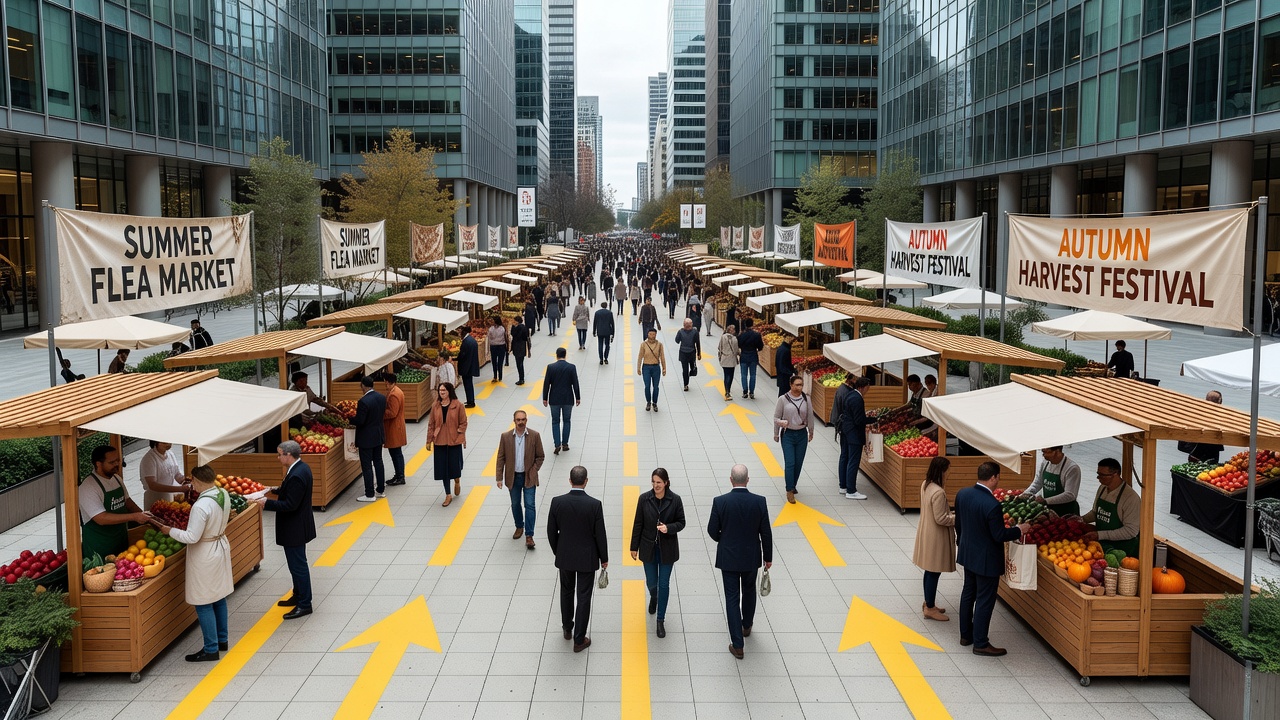
City planners have introduced paced plaza layouts across dense urban areas to direct pedestrian movement through deliberate spacing of pathways, seating clusters, and vendor zones, and these designs alter how vendors negotiate space while adapting to shifting seasonal demands. Data from multiple municipalities shows that such configurations reduce random foot traffic patterns yet increase dwell time near fixed stalls, which in turn modifies daily sales cycles for food vendors, artisans, and produce sellers.
Core Elements of Paced Plaza Designs
Planners incorporate elements like staggered entry points, raised platforms at intervals, and linear sightlines that guide people through the space at measured speeds, and these features emerged in projects completed between 2022 and 2025 in cities such as Barcelona, Melbourne, and Toronto. Observers note that the layouts rely on subtle cues rather than barriers, allowing vendors to position carts or tents in ways that capitalize on predictable flow without creating bottlenecks. Studies conducted by the European Environment Agency indicate that plazas adopting these methods experience 18 to 25 percent higher vendor retention rates during peak hours compared with traditional open squares.
Changes in Vendor Interactions
Vendors operating in paced plazas report more structured exchanges with neighboring stalls because fixed pathways limit spillover displays and encourage shared loading zones during setup hours, and this arrangement fosters formal agreements on shared utilities like power hookups or waste collection. Research from the University of Toronto's School of Cities documents that interactions shift from competitive positioning to coordinated timing, with groups of vendors rotating prime spots on a weekly basis to balance exposure. In one documented case from 2024, three produce vendors in a Melbourne plaza formed a rotation schedule that aligned with morning commuter surges, resulting in steadier revenue distribution across participants.
But here's the thing: the same layouts can create friction when seasonal items arrive, since vendors must adjust stall footprints to accommodate bulk deliveries without disrupting the established flow corridors. City records from New York’s Department of Transportation show permit applications for temporary expansions rose sharply in plazas with paced designs during harvest seasons, prompting officials to issue updated zoning guidelines that require advance coordination meetings.
Seasonal Market Rhythms and Layout Adaptations
Seasonal shifts influence market activity through changes in daylight, temperature, and tourist volume, and paced plazas channel these variations into more predictable vendor behaviors. Winter months bring reduced outdoor seating yet increased demand for covered vendor clusters near heated zones, while summer patterns favor extended evening hours with mobile carts following the main circulation paths. Figures released by the City of Melbourne in mid-2025 revealed that paced plazas maintained 12 percent more consistent vendor occupancy across all four seasons than comparable open spaces.
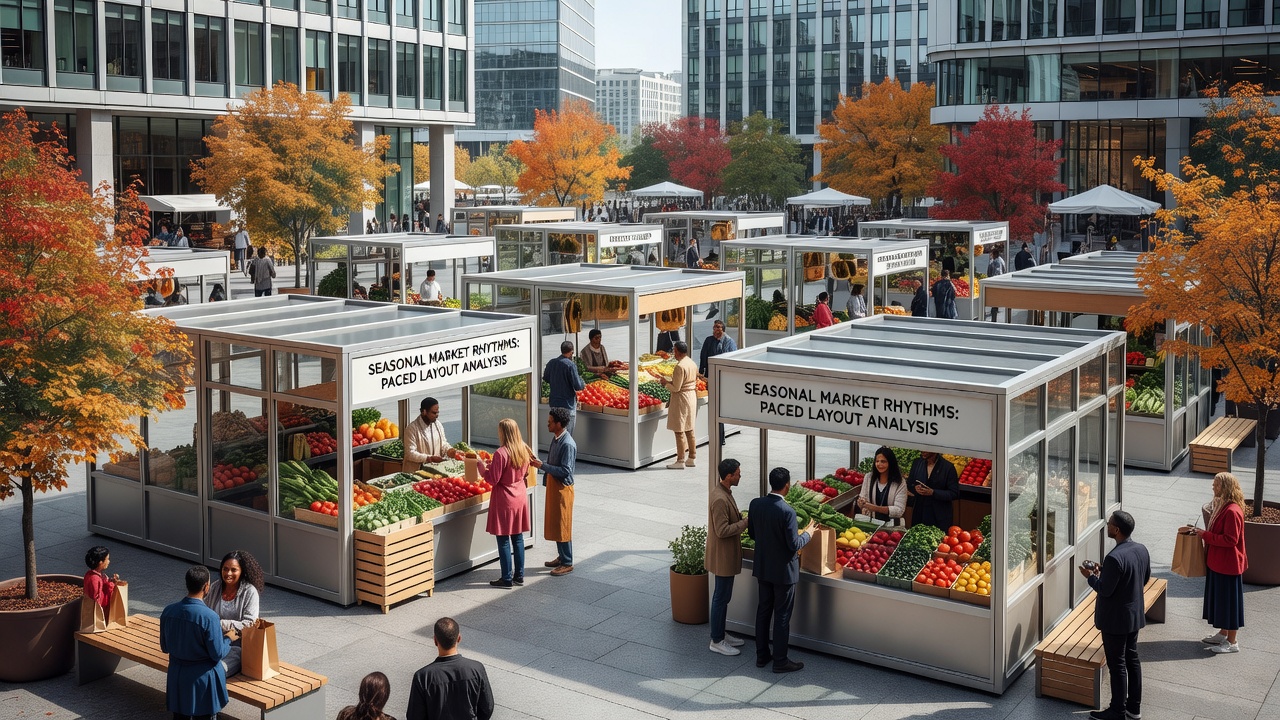
October 2026 marks the start of several municipal pilot programs that will test adjustable modular barriers within existing paced plazas, allowing vendors to reconfigure sections for harvest festivals without altering core circulation routes. Those programs build on earlier findings from Australian infrastructure reports that linked paced designs to improved waste management and reduced congestion during high-volume market days.
Observed Patterns Across Cities
Multiple cities have tracked how paced layouts affect specific vendor categories, and data indicates food trucks experience the most pronounced changes because their vehicles require designated pull-in areas that align with the plaza’s pacing rhythm. Artisan sellers, by contrast, benefit from clustered display zones that encourage browsing loops among visitors. A collaborative study involving researchers from Canadian and EU institutions found that vendor-to-vendor communication increased through digital scheduling apps introduced alongside the physical redesigns, cutting setup conflicts by nearly one third in participating sites.
Yet seasonal rhythms continue to test these systems, since holiday markets demand rapid scaling of temporary structures while preserving emergency access lanes built into the original pacing scheme. Officials in several jurisdictions now require vendors to submit seasonal layout proposals that reference both pedestrian flow models and historical sales data.
Conclusion
Paced plaza layouts continue to influence vendor operations by creating defined movement patterns that reward coordination and forward planning, and seasonal market rhythms adapt within those constraints through adjusted schedules and shared infrastructure. Evidence from ongoing urban projects demonstrates measurable shifts in interaction styles and occupancy rates, with further refinements scheduled through programs beginning in October 2026. These developments reflect broader efforts by city authorities to balance commercial vitality with controlled public space usage.